
Magazine
Post-Surgery Swelling: A Week-by-Week Guide to What's Normal

Swelling after cosmetic surgery follows a rough pattern, but it isn't identical from one procedure to the next. Here's what typically happens week by week — and which signs are worth a call to your clinic instead of a guess.
Why swelling happens after cosmetic surgery
Swelling is not a side effect that appears when something has gone wrong — it is the body's ordinary response to tissue being handled during surgery. Small blood vessels are disturbed, fluid moves out of them into the surrounding tissue, and the immune system sends resources to the area to begin repair. That process is uncomfortable and, in the mirror, often alarming in the first days. It is also, in almost every case, exactly what healing is supposed to look like.
How much swelling shows up, and how long it takes to settle, depends on more than the procedure name on the consent form. The extent of tissue handled, how deep the work went, and the technique used all play a part, and so do individual factors — circulation, skin thickness, medication, hydration, even how well a patient rested in the days before surgery. Two people having what looks like the same operation can have visibly different timelines, and neither one is doing anything wrong.
That variation is exactly why a responsible consultation gives a range rather than a single number, and why the timeline below is a general guide rather than a promise for any specific patient. What follows is what tends to happen, roughly, at each stage — useful for knowing what to expect, not for judging your own recovery against someone else's photos.
The first two weeks: swelling at its peak
Swelling typically builds for the first two to four days after surgery, then plateaus before it slowly starts to ease. Facial procedures often peak earlier and more visibly than body procedures, simply because facial skin is thinner and swelling has less room to spread quietly beneath it. Around the eyes especially, patients are sometimes surprised by how dramatic the first week looks compared to how quickly it settles afterward — that area tends to swell fast and, in most cases, ease faster than people expect too.
Body procedures behave differently. After liposuction, for example, swelling is usually managed with a compression garment worn for several weeks, not because the swelling itself is dangerous but because steady, even pressure helps fluid resolve more predictably and helps skin settle against the new contour. Patients who stop wearing a garment early because the visible swelling has gone down are often surprised at how much it still mattered underneath.
Elevating the treated area, staying hydrated, and following whatever cold-or-warm compress schedule the surgical team gives are the practical tools available in this window. There is no fixed day when swelling disappears completely for everyone — treat the first two weeks as the peak, not the finish line.

Weeks three to six: swelling shifts, it doesn't vanish
By the third week, most patients notice the swelling has changed character rather than simply reduced. Gravity tends to pull remaining fluid downward, so facial swelling that started high on the cheeks or eyelids can migrate toward the jaw or neck, and it is common for one side to look slightly puffier than the other for a while. That asymmetry unsettles people, but it is a normal part of fluid resolving unevenly, not a sign the surgery itself was uneven.
This is also, not coincidentally, when many patients schedule their first real follow-up. A visit to a Mont Kiara clinic in this window is usually timed to check how swelling is resolving and confirm healing is on track — not to judge a final result, which is still weeks or months away depending on the procedure.
Sodium intake, alcohol, sleep position, and activity level all continue to influence how fast this stage moves. A salty meal or a poor night's sleep can make swelling look noticeably worse the next morning even well past the two-week mark, which is worth remembering before assuming a setback has happened.
Three months and beyond: when the last of it settles
The visible bulk of swelling is usually gone well before this point, but deeper, residual swelling can continue resolving for three to six months, and for procedures involving cartilage or deeper tissue planes — the tip of the nose after rhinoplasty is a well-known example — it can take up to a year to fully settle into its final shape.
It follows the same slow, patient timeline as how a surgical scar actually settles beneath the skin — both are part of the same underlying maturation process working on a schedule the calendar can't be rushed against.
By this stage, most people around the patient can no longer tell anything happened at all, even while the patient themselves might still notice small, private changes week to week. There is no guaranteed date when that noticing stops — it simply becomes less frequent, and eventually stops mattering.
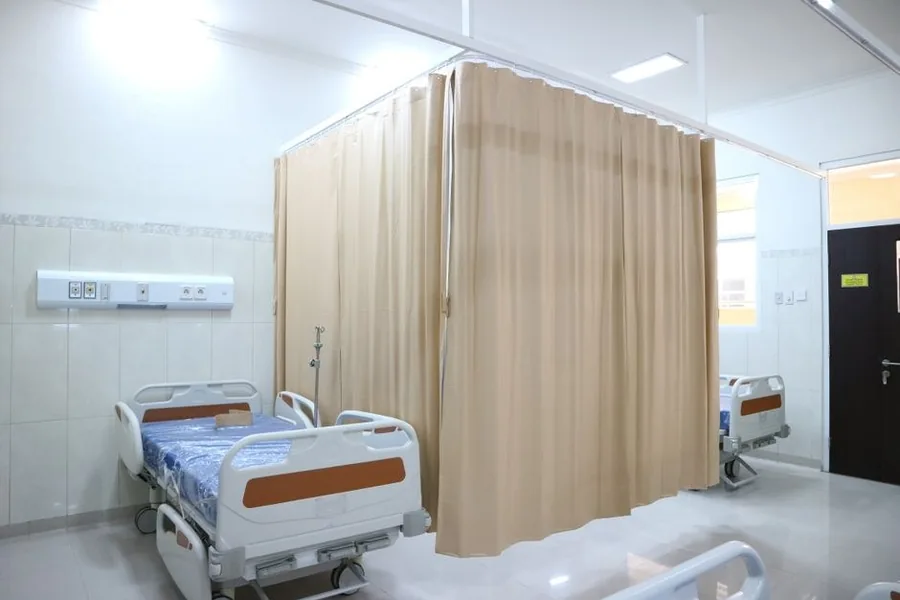
Swelling that is not normal — signs worth a call to your clinic
Most swelling, even when it looks alarming in the mirror, follows the pattern above. A smaller set of signs falls outside that pattern and is worth a direct call rather than a guess: swelling that suddenly increases on one side after it had already been improving, warmth or redness spreading rather than fading, fever, pain that prescribed medication isn't controlling, or drainage that changes in smell or colour.
None of that is a diagnosis you can make by comparing your own photos to someone else's recovery online, and it isn't meant to be — it's a shortlist of the moments where checking in with the team who did the surgery matters more than watching and waiting.
If anything about your own recovery doesn't match what you were told to expect, the fastest way to find out whether it's normal is to contact your clinic directly. A quick check is rarely wasted, and a team that operated on you is in a far better position to judge your specific case than a general timeline ever can be.
Questions worth asking about your own swelling timeline before you book
A useful consultation should leave a patient with a swelling timeline specific to their own procedure and anatomy, not a generic estimate borrowed from a different case. It's reasonable to ask directly how swelling typically behaves for the exact technique being proposed, and how that might differ for your skin type or the area being treated.
It's also worth asking about the practical side before surgery rather than after: how long a compression garment is expected to be worn, what activity restrictions apply and for how long, and when follow-up visits are scheduled to check how healing is progressing.
None of this removes the discomfort of the first couple of weeks, but knowing roughly what to expect — and roughly when it tends to ease — tends to make that stretch far less stressful than facing it without a timeline at all.
Magazine
16 September 2026 · 7 min read
Pico Laser Aftercare: Why Sun Protection Decides Whether Pigmentation Returns
Pico laser breaks pigment into fragments your body clears over the following weeks — but what happens to your skin in that window, not the laser settings, is usually what decides whether sunspots or melasma actually stay away. Here is what a proper aftercare routine covers.

15 September 2026 · 7 min read
HIFU Skin Tightening: Who Is (and Isn't) a Good Candidate
HIFU promises a lift without surgery, but the ultrasound energy behind it only works within a fairly narrow band of skin laxity. Here is how a proper consultation actually decides whether you fall inside that band — and what happens when the honest answer is no.